
DJ Education
What a Professional Event DJ Is Actually Managing
The visible performance is only one part of the job. Here is what a professional DJ may be monitoring before and during an event.
By Arizona DJ Connection · September 25, 2026
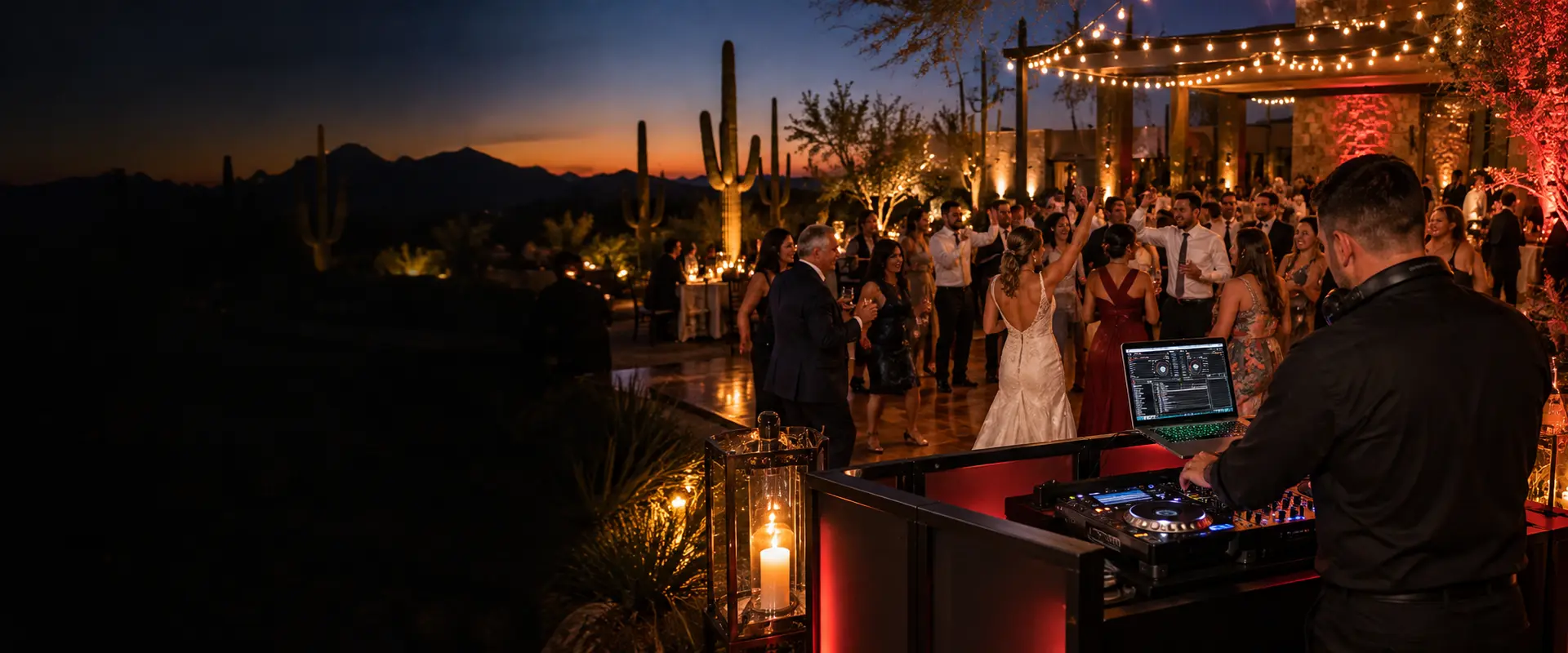
Guests usually notice the music and microphone. They rarely see the preparation and real-time decisions that make those things feel effortless.
Before the event, a professional DJ studies the schedule, confirms names and pronunciations, reviews special songs, identifies restricted music, plans equipment, and coordinates access with the venue. For weddings and formal events, the DJ may also compare timelines with the planner, photographer, catering team, and venue staff.
Load-in is a production decision. The DJ must determine where equipment can enter, how far it must travel, whether stairs or elevators are involved, what power is available, where cables can be routed safely, and how sound will cover the room. Outdoor events add weather, wind, shade, battery, and temperature concerns.
During setup, the DJ builds and tests a complete signal path. Music devices connect to the mixer, the mixer feeds speakers and subwoofers, microphones are checked, levels are balanced, and backup options are made ready. Ceremony and reception spaces may require separate systems operating on the same day.
Once guests arrive, the DJ begins reading the room. Volume should support conversation during cocktails or dinner and create energy when dancing begins. Music choices must account for age ranges, cultures, requests, venue rules, and the host’s priorities without making the event feel like a rigid playlist.
Microphone work is another layer. Introductions, announcements, speeches, formal dances, games, and transitions need clear timing. The DJ often confirms that the photographer is ready, catering is prepared, and the correct people are present before making an announcement.
Timelines rarely remain exact. Dinner runs late, transportation is delayed, speeches grow longer, or the sunset changes photography plans. A professional DJ adjusts quietly and helps the room understand what is happening without broadcasting the problem.
Technical monitoring continues throughout the event. The DJ listens for distortion, feedback, battery warnings, wireless interference, unexpected volume changes, and guest hazards near equipment. Backup gear matters because the response must happen in minutes, not after the event.
At the end, the DJ manages a safe load-out while guests and staff are still moving through the venue.
A professional DJ is part performer, part technician, part communicator, and part event-flow manager. Understanding that full role makes it easier to compare services and recognize what a well-prepared company is providing.