Gear Business
Buying vs. Renting DJ Gear in Arizona
Use frequency, transportation, storage, maintenance, and event scale to decide whether a piece of DJ equipment should be purchased or rented.
By Arizona DJ Connection · September 25, 2026
Buying gear feels like progress, but ownership is not always the most profitable or practical choice. For Arizona DJs, the right decision depends on how often the equipment will work, what it costs to move and protect, and whether it solves a regular business need.
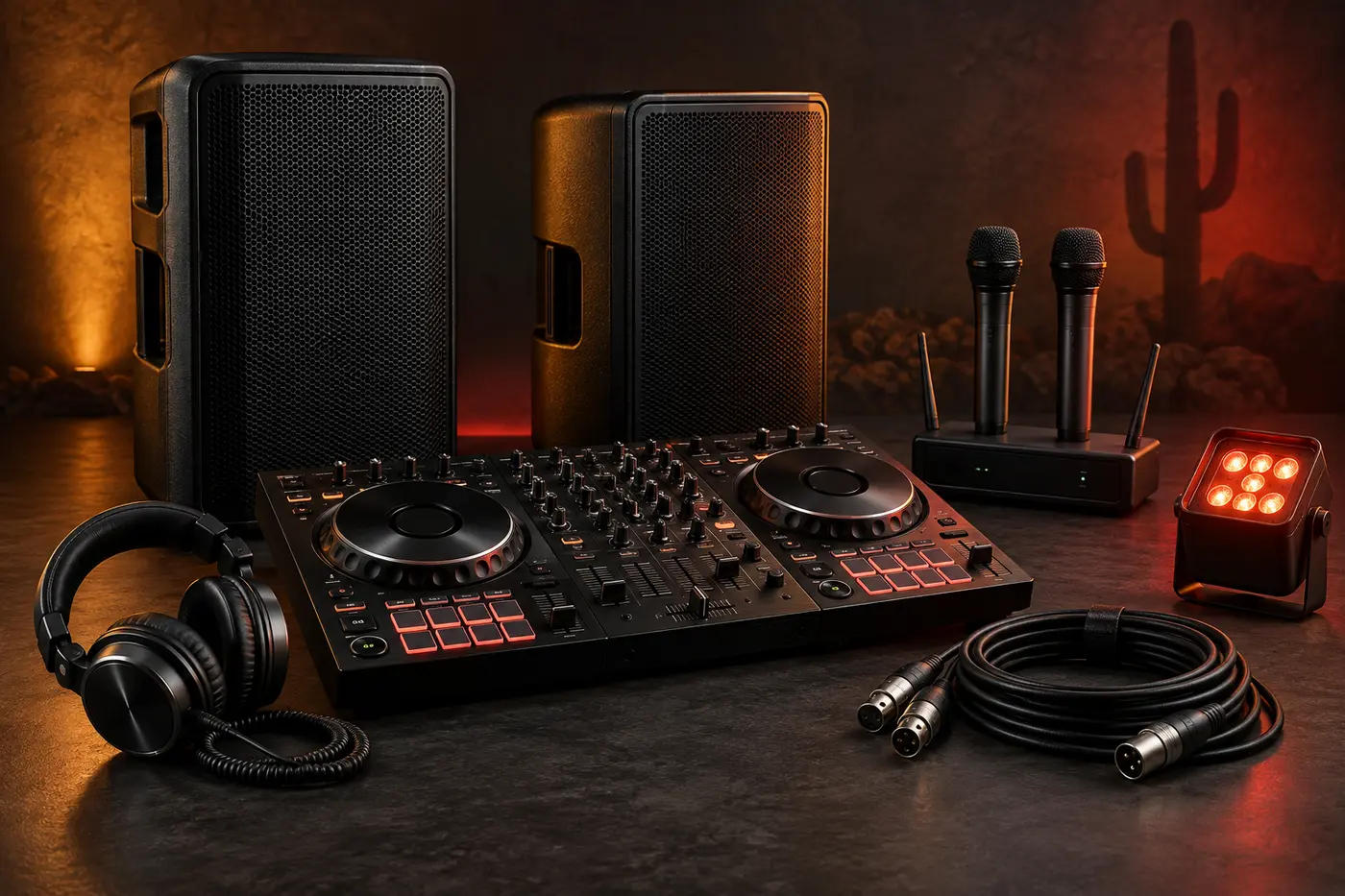
Buy the core tools you use at nearly every event. A dependable controller or mixer, headphones, microphones, cables, and a properly sized primary sound system give you consistency. Familiar equipment also reduces setup time and makes troubleshooting easier.
Consider renting when an event is larger than your normal work. Extra subwoofers, line-array systems, large lighting packages, staging, truss, generators, and specialty effects can be expensive to own, transport, store, insure, and maintain. Renting allows the event price to carry the equipment cost without tying up cash between bookings.
Calculate utilization honestly. Estimate how many paid events will use the item during the next twelve months. Include financing, cases, accessories, repairs, insurance, storage, vehicle space, labor, and resale value—not only the purchase price. A bargain that requires a larger vehicle may not be a bargain.
Arizona conditions matter. Heat shortens battery life and can punish electronics left in vehicles. Dust enters fans, faders, and connectors. Outdoor gear may need covers, shade, secure power, and more frequent maintenance. Storage must be dry, reasonably temperature controlled, and secure.
Rent before buying unfamiliar equipment. One or two real events will reveal whether the item fits your workflow, vehicle, setup time, and clients. This is especially valuable for photo booths, battery-powered speakers, cold-spark systems, large facades, and complex lighting fixtures.
For used purchases, inspect locally when possible. Test every input and output, run powered equipment at operating volume, check battery condition, inspect cases and connectors, confirm serial numbers, and ask about repair history. Never let urgency replace verification.
Rentals also require discipline. Confirm pickup and return windows, replacement value, deposits, damage rules, included cables, and who is responsible for setup. Photograph condition at handoff and test the equipment before leaving.
The strongest equipment strategy is usually hybrid: own the dependable core that defines your service, then rent specialized or high-capacity gear when a confirmed event pays for it. That keeps the business flexible without turning the warehouse into a collection of idle purchases.