Hiring a DJ
Before You Sign: 14 DJ Contract Details Arizona Event Hosts Should Understand
Before booking an Arizona DJ, understand the coverage hours, performer, equipment, payment schedule, cancellation terms, backup plan, overtime and other details that should be clear in writing.
By Arizona DJ Connection · October 9, 2026
# Before You Sign: 14 DJ Contract Details Arizona Event Hosts Should Understand
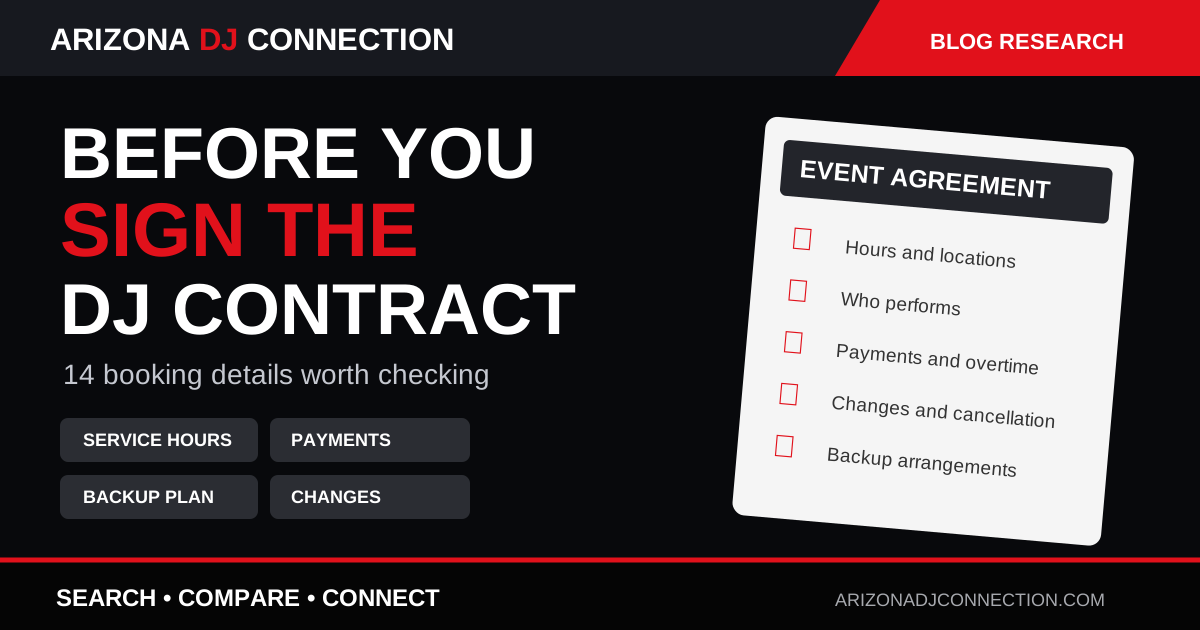
A DJ contract should do more than confirm a date and a price. It should describe what the DJ company is providing, what the client is responsible for, and what happens if the event changes.
That matters whether you are planning a wedding in Mesa, a company celebration in Phoenix, a quinceañera in Glendale, or a private party in Queen Creek. A friendly conversation is a good start, but months later everyone benefits from having the important details in writing.
This is a practical research checklist, not legal advice. Contract terms vary, and questions about enforceability or legal rights belong with a qualified attorney. Use these 14 points to make your DJ conversations more productive.
1. The Exact Event Date, Address, and Service Hours
Confirm the calendar date, venue address, start and end of DJ coverage, and the spaces where service is expected.
If the DJ will provide ceremony audio on a lawn, cocktail music on a patio, and reception sound in a ballroom, those are three distinct service areas. A contract that says only “five hours of DJ service” may not explain the full plan.
Ask whether setup and teardown occur outside paid performance hours. Also confirm when the DJ must have equipment fully ready.
2. Who Will Actually Perform
A company name is not always the name of the person behind the booth.
Ask whether your agreement identifies a specific DJ or MC, whether a different performer may be assigned, and how any change would be communicated. If you met a particular DJ and want that person, make sure your expectations are documented.
A company with multiple entertainers is not necessarily a problem. The important thing is knowing who is responsible for your event.
3. What Equipment and Services Are Included
Look for a clear scope of work rather than a vague “premium package” label.
Depending on the event, the scope may include speakers, subwoofers, DJ controller or mixer, microphones, ceremony sound, cocktail-hour music, dance-floor lighting, uplighting, a photo booth, or an assistant.
You do not need every cable model in the contract. You do need to know which functions the package covers and which items cost extra.
4. Ceremony, Cocktail Hour, and Multiple Setups
For weddings and events spread across several areas, ask whether separate systems are included.
Can the DJ play music in the ceremony area while the reception system is already installed? Is a wireless microphone provided for the officiant? Who handles music cues? Is a second operator required?
Moving one system during a guest transition is not the same service as operating two systems simultaneously. Make that distinction before you sign.
5. Planning Meetings, Music Requests, and MC Duties
A DJ may provide music only, music plus announcements, or extensive timeline coordination.
Clarify whether planning meetings are included, how you submit special songs and pronunciation notes, and when final selections are due. Ask who announces introductions, speeches, cake cutting, and other formalities.
If you have cultural traditions, multiple languages, or a detailed program, discuss them early rather than assuming every DJ package includes the same level of preparation.
6. The Total Price and Payment Schedule
The agreement should show the total amount and the timing of each payment.
Check whether the initial payment is called a retainer, deposit, booking fee, or something else; those words may have different meanings in a particular agreement. Do not assume any payment is refundable without reading the terms.
Ask whether taxes, travel, parking, early access, extra setup locations, assistants, and optional services are already included.
7. Overtime and Additional Services
Events can run late, and plans can grow.
Find out whether overtime is offered, what it costs, how much notice is needed, and who is authorized to approve it. Also ask whether the DJ can stay beyond the contracted end time if the venue permits it.
If you add a ceremony system, extra lighting, or another hour after booking, request the change in writing with the updated total.
8. Cancellation Terms
Life happens. An event may be canceled for reasons unrelated to the DJ.
Read what happens if the client cancels at different points before the event. Is there a payment due even if no performance occurs? Are any amounts refundable? How must notice be delivered?
The purpose of this section is not to predict a cancellation. It is to understand the financial commitment you are making.
9. Postponement and Date Changes
A postponement is not always treated the same as a cancellation.
Ask whether payments can transfer to a new date, whether the original DJ must be available, whether rates may change, and what happens if the new date cannot be accommodated.
For outdoor Arizona events, it is especially useful to discuss weather-related changes and venue relocation before the day arrives.
10. Backup Equipment and Performer Contingencies
Even reliable professionals can face equipment failures, vehicle trouble, or illness.
Ask the DJ company what backup equipment is available, how it handles an unavailable performer, and who contacts you if a substitution becomes necessary.
No company can promise that nothing will ever go wrong. A clear contingency process is more meaningful than a vague guarantee.
11. Venue Rules, Power, and Weather Protection
Your venue may impose sound limits, insurance requirements, load-in windows, power restrictions, or early shutdown times.
For outdoor events, clarify who provides weather protection, shade, a safe level surface, and adequate electrical power. Arizona heat, dust, wind, and monsoon conditions can affect event production.
A DJ should not be expected to operate electrical equipment in unsafe conditions. Ask how safety-related decisions and alternate locations will be handled.
12. Insurance and Responsibility for Damage
Some venues require vendors to provide proof of liability insurance. Ask whether the DJ carries coverage appropriate for the work and whether the venue needs documentation.
Also read the contract's provisions about damaged equipment, guest interference, and the client's responsibilities. If a clause is unclear, request an explanation before signing.
A verification badge or insurance check is useful information, but it is not a substitute for understanding the actual agreement.
13. Photography, Video, and Promotional Use
Some DJ companies photograph or film their setups and events for portfolios or social media.
If privacy matters to you, ask whether the contract permits promotional images, whether guests may appear, and how to request restrictions. Corporate events and private family celebrations may have very different expectations.
Likewise, if you expect the DJ to provide recordings or media after the event, make sure that service is explicitly included.
14. How Changes and Disputes Are Handled
Look for a practical way to communicate changes.
Who is the primary contact? Are updates made by email, through a planning portal, or with a signed addendum? Which document controls if a quote and contract conflict? How should either party raise a concern?
Clear communication procedures are especially valuable when several months pass between booking and event day.
Five Questions to Ask Before Signing
After reading the agreement, ask the DJ:
1. **What exactly is included in this total price?** 2. **Who will perform, and what happens if that person is unavailable?** 3. **What is the process if our date, venue, or schedule changes?** 4. **What additional charges could reasonably apply?** 5. **What do you need from us to deliver the service safely and on time?**
If the answers differ from what the contract says, request clarification in writing.
Watch for Unclear Language, Not Just Low Prices
A short agreement is not automatically bad, and a long agreement is not automatically better. The goal is clarity.
Pay extra attention to broad promises without specific services, missing event hours, unclear payment terms, no contact information, or statements that conflict with the written quote.
Do not feel pressured to sign before you have had a chance to read the document and ask questions.
A Better Booking Decision Starts With Clear Expectations
The best DJ for your event is not simply the person with the lowest quote or the most impressive equipment photo. It is someone whose services, approach, communication, and written agreement fit the experience you are planning.
Use Arizona DJ Connection to research profiles and connect directly with independent Arizona DJs. Once you have a shortlist, compare the same contract details across your proposals.
**Research before you book. Understand the agreement before you sign.**